

Birmingham High Gym, Birthplace of Wheelchair Basketball, Gets Its Due
On a Saturday morning in Van Nuys, Calif., city officials, Paralympians and veterans gathered at Birmingham Community Charter High School to formally recognize a piece of sports history that most Angelenos walk past without knowing: the gymnasium where wheelchair basketball was born.
The Aug. 8 ceremony, held two years to the day before the opening ceremony of the 2028 Paralympic Games in Los Angeles, marked the site of what is recognized as the first organized wheelchair basketball game in history — played nearly 80 years ago, in November 1946, in the gym of the former Birmingham General Veterans Administration Hospital.
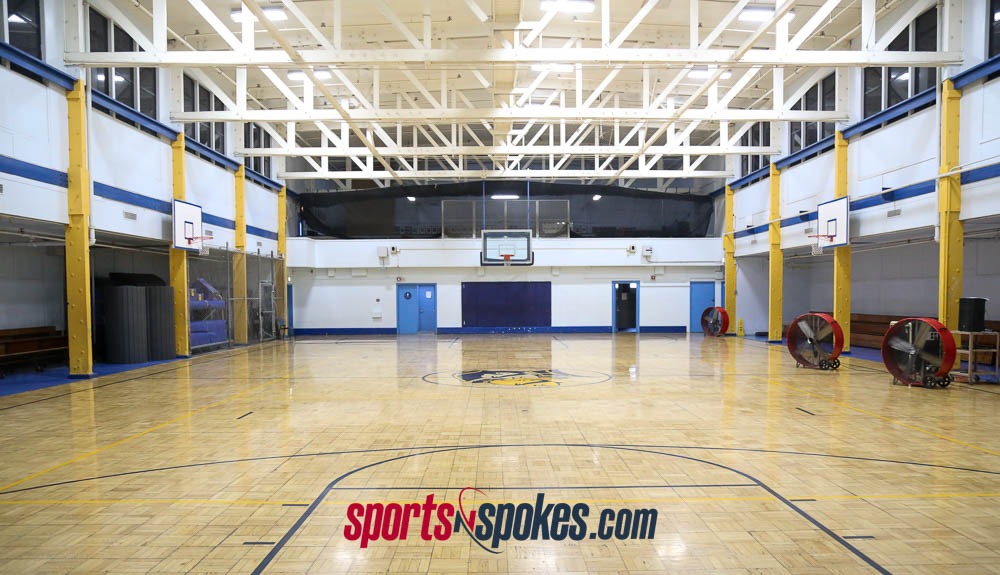
The event unveiled a new street designation, “Wheelchair Basketball Square,” at the intersection of Victory and Balboa boulevards, along with a plaque inside the historic gym and plans for a mural honoring the sport’s origins. An exhibition game followed the ceremony, played on the court of the new gym and featuring players from Rancho Los Amigos National Rehabilitation Center and Angel City Sports.
A Site With History
Los Angeles Mayor Karen Bass told the crowd the event marked two milestones: the formal recognition of the 1946 game and the two-year countdown to the first Paralympic Games ever hosted by Los Angeles (LA28).
“Together we’re uplifting incredible achievements of our elite Paralympic athletes … and all individuals with disabilities,” Bass says, framing the day around her “Games for All” accessibility commitment, signed last summer. She pointed to more than 16,000 square feet of sidewalk repairs already completed citywide, a new infrastructure initiative launching next month and an LA28-backed program bringing adaptive sports to 1,000 Angelenos across city parks.
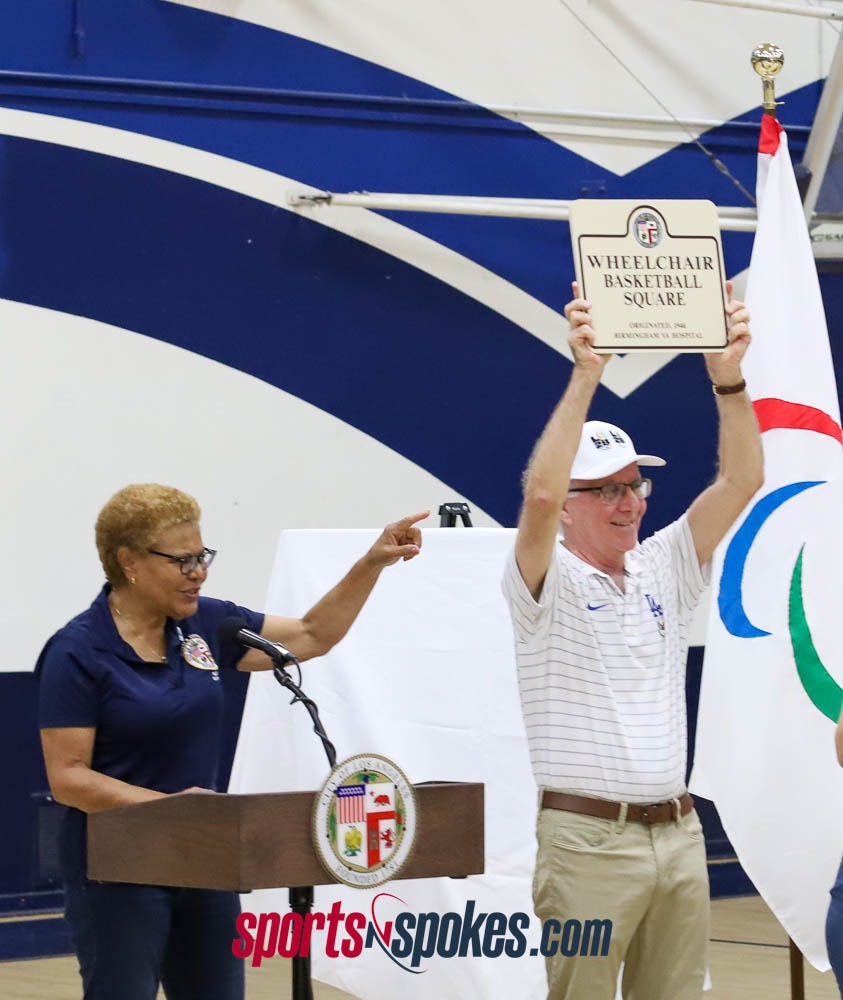
Bass announced that the intersection outside the gym would be officially designated Wheelchair Basketball Square, and that the city had begun work with the National Wheelchair Basketball Association and a disability-focused muralist on a mural honoring “the incredible legacy that the veterans and athletes who have passed through this building have left on our communities.”
From The Hospital Bed To The Hardwood
The deeper history of the site was laid out by Shaun Castle, chief operating officer of Paralyzed Veterans of America (PVA), who described the conditions that led veterans to organize the game in the first place.
Castle says that in 1946, life expectancy for someone with a spinal cord injury was less than a year, with most of that time spent confined to a hospital bed. That same year, a group of World War II veterans returned home with spinal cord injuries to a country that, in Castle’s words, they “couldn’t access after sacrificing so much for it.” They banded together to found Paralyzed Veterans of America, fighting for better medical treatment, civil rights and independence, including the right to be physically active.
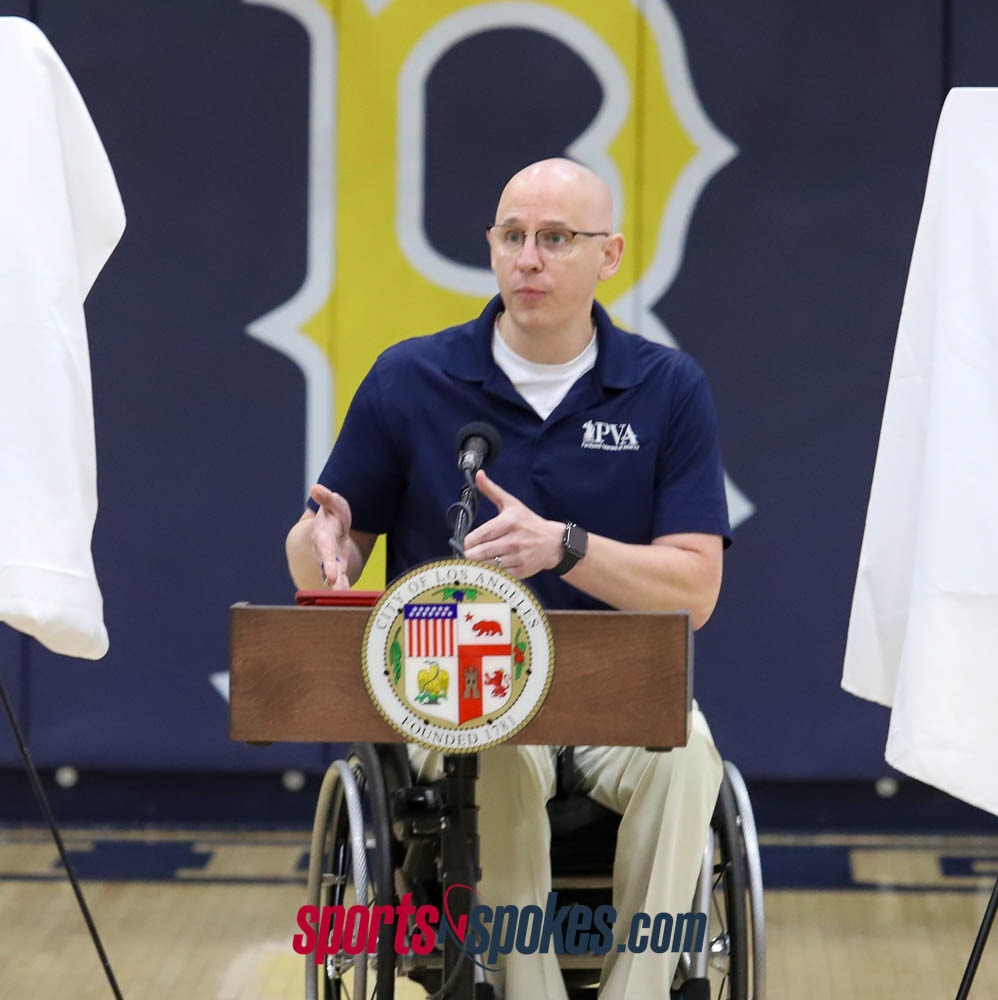
That advocacy led directly to the game played in the Birmingham gym, which PVA recognizes as the first organized wheelchair basketball game in history. Castle noted the organization now co-hosts the National Veterans Wheelchair Games, a competition which recently ran for the 46th year, with the Department of Veterans Affairs.
Castle says the newly unveiled plaque honors that legacy, with the hope that the site can continue to serve “the next generations who refuse to accept the limitation of what is possible” — an echo of the defiance that drove the original PVA founders.
What The Sport Made Possible
Two Paralympians who addressed the crowd, Steve Serio and Jorge Salazar, spoke to what the sport has meant in their own lives.
Serio, a multi-time Paralympic gold medalist and world champion, told attendees he was born with a spinal tumor that went undiagnosed for 11 months, leading to paralysis. He described growing up feeling like an outsider in “a world that does not work for us,” until he discovered adaptive sports.
“I learned that I am embracing my disability,” Serio says, “not by hiding it, not by feeling insecure about it, but by embracing the things that may be different.” He called it “an incredible honor to be at the site where wheelchair basketball was created” — crediting the sport with shaping who he is “as a person, the teammate, the athlete and the leader.”
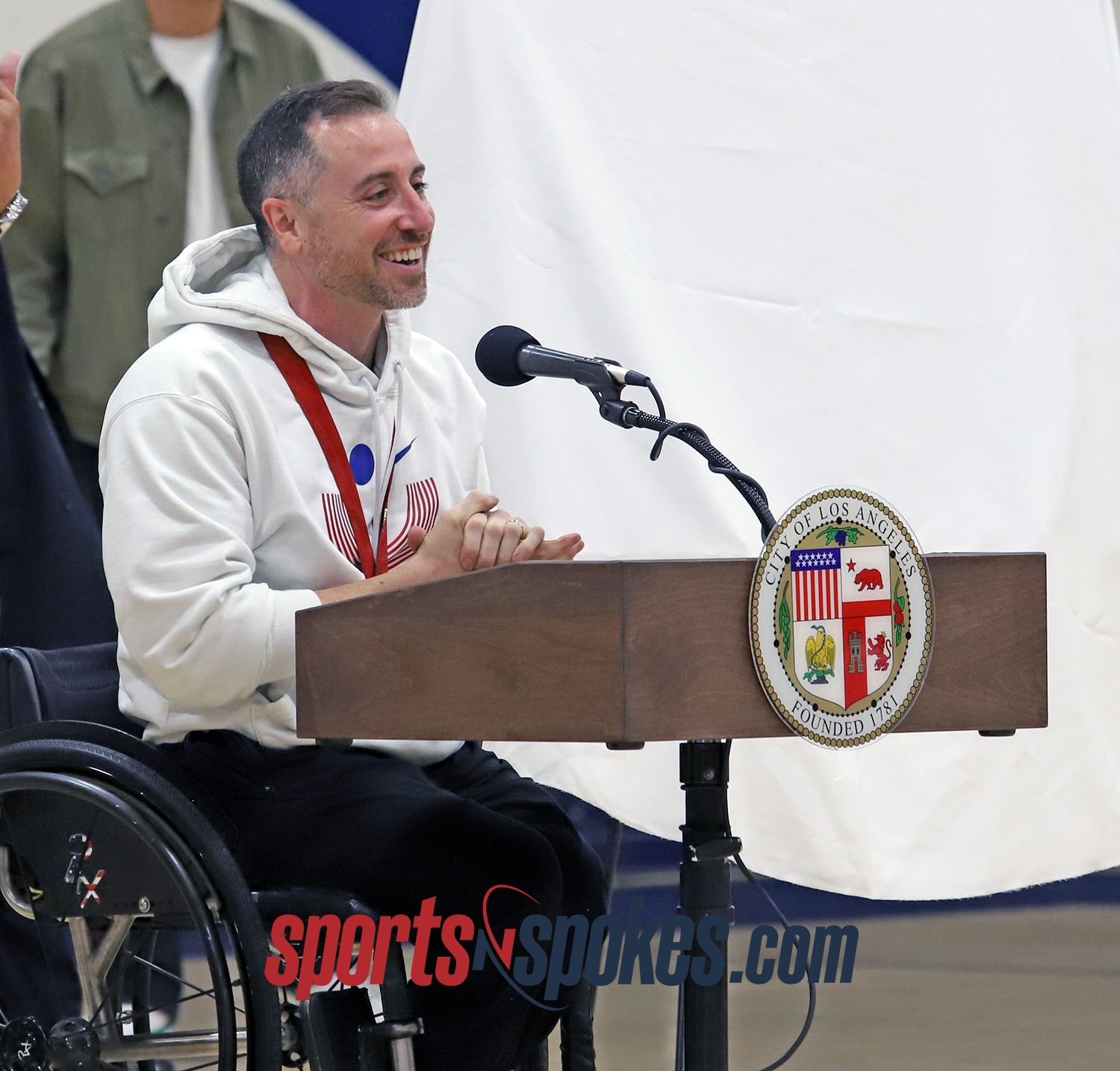
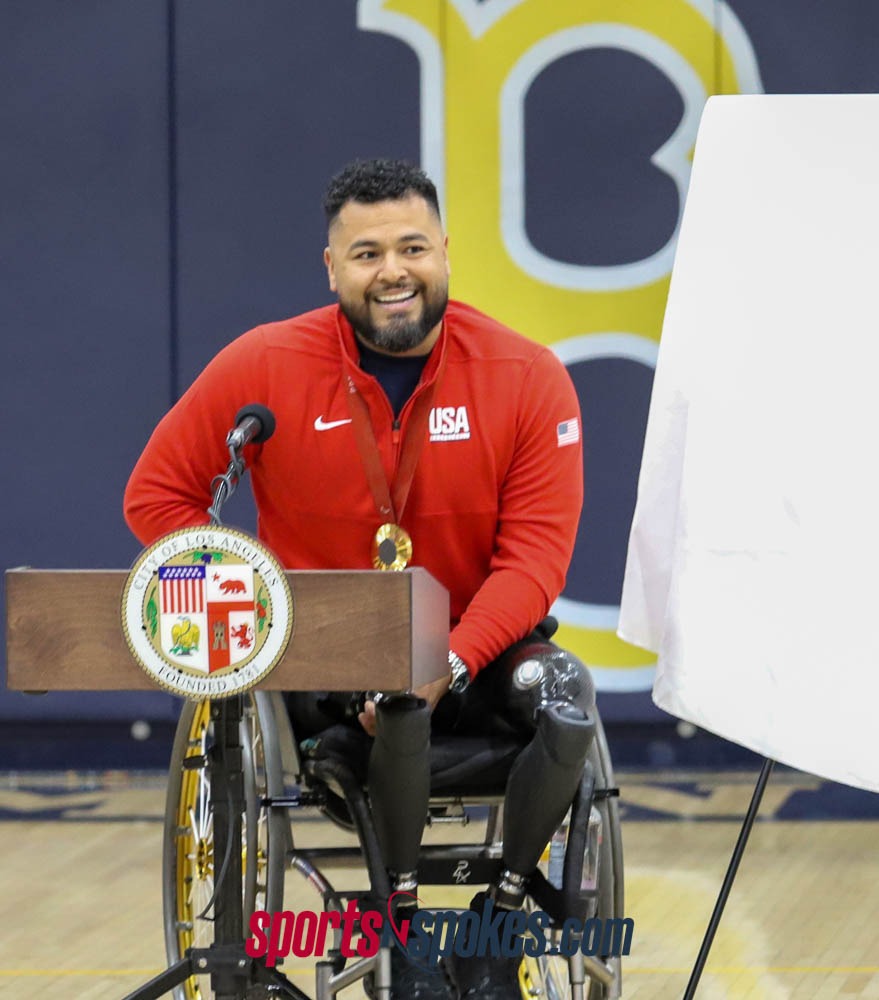
Salazar, a Paralympic gold medalist and U.S. Marine Corps veteran currently on the U.S. men’s national team, described the gym as representing something beyond the sport’s founding.
“This gym represents much more than the birthplace of the sport,” he says. “It represents hope.”
Salazar reflected on the veterans who gathered on the same site nearly 80 years earlier “to be part of healing,” and says the sport taught him that “disability does not define potential” — citing the discipline, resilience and teamwork it instilled in him. Looking ahead to 2028, he says he hopes young people with disabilities will see themselves represented in the Games.
“Today, we honor the veterans who started this journey,” Salazar says. “Tomorrow, it is our responsibility to carry the legacy forward.”
Looking Toward 2028
The ceremony closed with certificates of recognition presented to the National Wheelchair Basketball Association, PVA and the Rancho Los Amigos wheelchair basketball team, followed by the unveiling of the Wheelchair Basketball Square sign and gym plaque.
Los Angeles will host the Paralympic Games for the first time in 2028. Organizers said Saturday’s ceremony was meant as a tribute to where the sport started — and a reminder of the accessibility work the city still has ahead of it.