
To Alex Zanardi, success was never dependent on physical completeness. It lived in his head and heart, not in his legs.
The world lost Alex on May 1st. He was 59. I did not learn of it the way you learn about a stranger’s death — with detachment and a quick scroll past. I had been thinking about him already, about what made his story worth writing down. The news landed differently because of that.
I never met him, and there is no need to make his story grander than it is. What stands out is simple. He competed at a high level in two very different disciplines, which is rare by any standard.
Before his crash, he had already reached the top tiers of motorsport, racing in Formula One and winning championships in CART. For most athletes, that level of success defines a career. It’s the peak that people either sustain or just step away from.
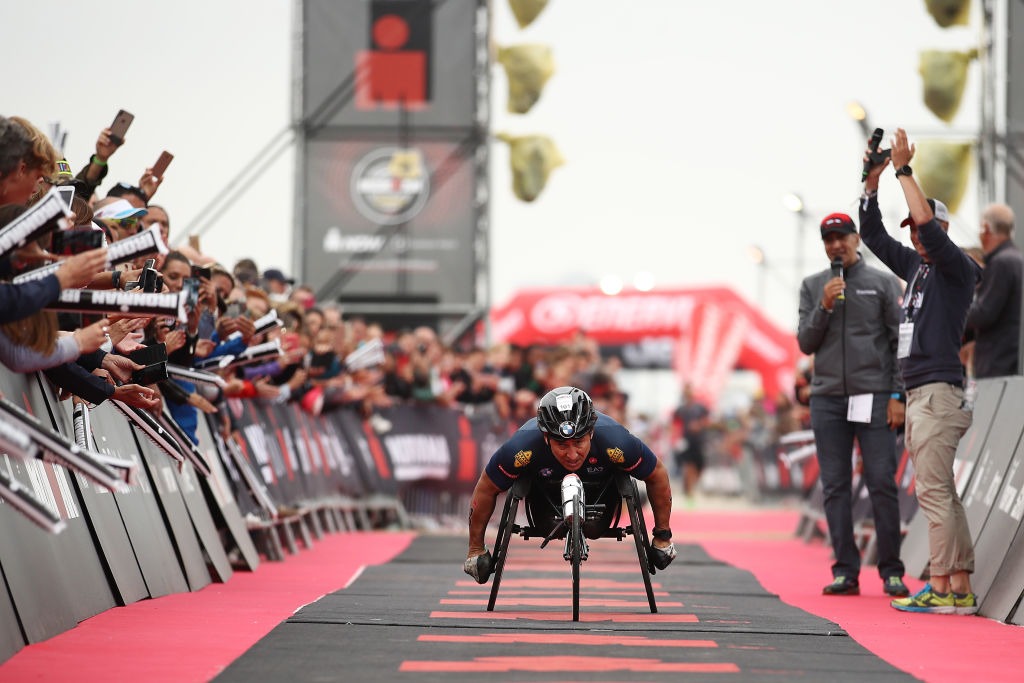
After the 2001 crash at Lausitzring, that path disappeared. What is compelling is how he approached what came next. He did not treat hand cycling as a hobby or a way to stay active. He treated it as a discipline he needed to learn from the ground up.
That shift was fundamental. When he was racing cars, performance was partly mediated by the machine and his relationship with it. In hand cycling, the equation was more direct. His body did the work, and small inefficiencies could be consequential. He had to relearn movement, rebuild strength, and adapt to a different physical demand.
What defined his transition was not just the outcome, but the method.
He used his connections, technical expertise, and engineering instincts from racing to improve in hand cycling, approaching it like an engineering problem. He analyzed data, refined equipment, and searched for marginal gains. That definitely helped.
But equally important was the mindset he carried over. Precision, consistency, and patience were applied to something entirely new.
The crash forced change, but the adaptation was deliberate. He did not lower his standards. He recalibrated how to meet them. That’s why I think his story resonates, especially in adaptive sports. It feels less like abstract inspiration and more like a clear example of what it takes to start over and still aim high.
In hand cycling, the machine amplifies performance far less than a race car. It relies more on the body and mind. Through sustained effort, he rose to the top again, winning multiple gold medals at the Paralympic Games. His success was not symbolic. It was dominant.
What I think ultimately set Alex apart was not just that he excelled in two arenas, but that he refused to let circumstances define his limits. His pursuit of excellence remained constant, rooted in mindset and intent, regardless of the form it had to take.
As always, let me know what you think at al@pvamag.com.