

Women’s Para Ice Hockey Is Going Global — and the Momentum Is Building
In the span of two weeks this spring, para ice hockey made history — and women’s para ice hockey took a giant leap forward.
First came the inaugural Latin America Para Ice Hockey Skills Development Camp in Mexico — the first para ice hockey camp ever held on the continent, open to all athletes. Two weeks later, the first international women’s para ice hockey development camp opened in Vierumäki, Finland, drawing 86 applicants from 16 countries and bringing 36 players from 10 nations together on the ice for the first time.

Behind both milestones was the Women’s Para Ice Hockey Foundation and Team USA veteran Monica Quimby, who has made it her mission to grow the women’s game from a handful of national programs into a sport with a place on the Paralympic stage.
“We’re on the precipice of something,” Quimby says. “We’re right there.”


First Stop: Latin America
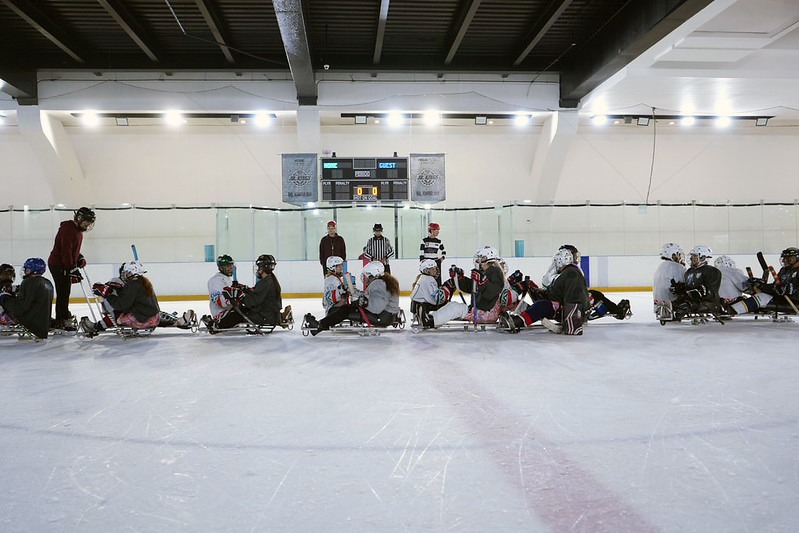
The Mexico camp was about the introduction. Open to all para ice hockey athletes, it brought together men and women from Mexico and Brazil — most with little to no experience in the sport — along with mentors from the U.S. and Canada. It was the first time para ice hockey had been formally organized at the continental level in Latin America.
“We did everything from the fittings to showing them the equipment, and we went through the basics,” Quimby says. “These are people that have never been in sleds before, or maybe in a sled maybe one or two times. There’s so much to learn in the beginning, and you fall over so many times. The biggest thing is to keep them smiling, keep them positive.”
A language barrier added complexity — not all participants spoke English — but smiles proved to be universal. And the camp produced a discovery that may be pivotal to the sport’s future: Seven women from Mexico are already playing para ice hockey, including a goalie. With a full roster requiring nine players, Mexico needs just two more to field a complete squad.
“They’re really close,” Quimby says. “They really just need two more players. They’re pretty developed.”
Next Stop: Finland
The Finland camp was a different undertaking entirely — more structured, more international and organized specifically for women. Funded by the Women’s Para Ice Hockey Foundation and sanctioned by World Para Ice Hockey, the camp at the Vierumäki Olympic Training Center drew 86 applicants from 16 countries, far exceeding expectations.
“I had no idea it was going to blow up like that,” Quimby says. “But it was so exciting that it did, because that means that this sport is developing, it’s growing, it’s here to stay.”
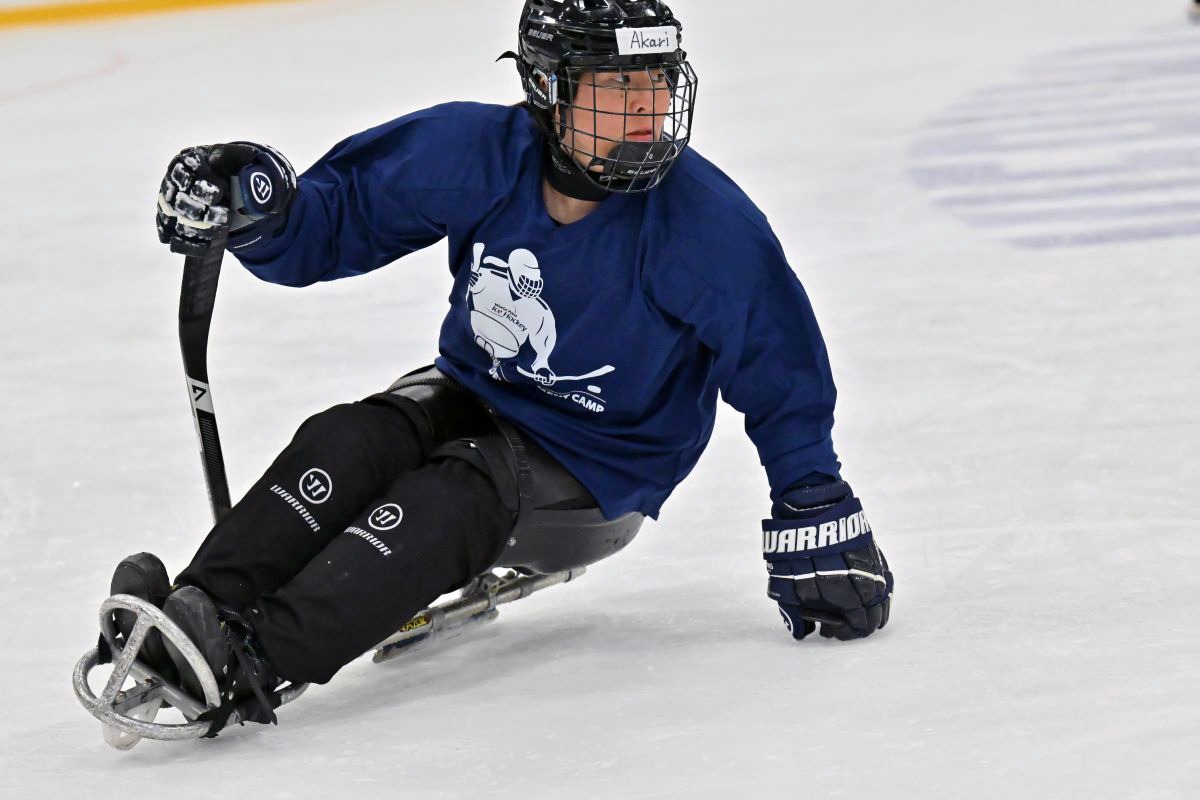
Ultimately, 36 players from 10 nations — Australia, Czechia, France, Great Britain, Hungary, Japan, Latvia, Norway, Slovakia and host country Finland — took the ice over four days of two-a-day sessions. Instructors included Team USA world champions Quimby, Erica McKee and Catherine Faherty, as well as Brad Bowden, a multimedal Canadian Paralympian now based in Japan, who attended alongside Japanese standout Akari Fukunishi.
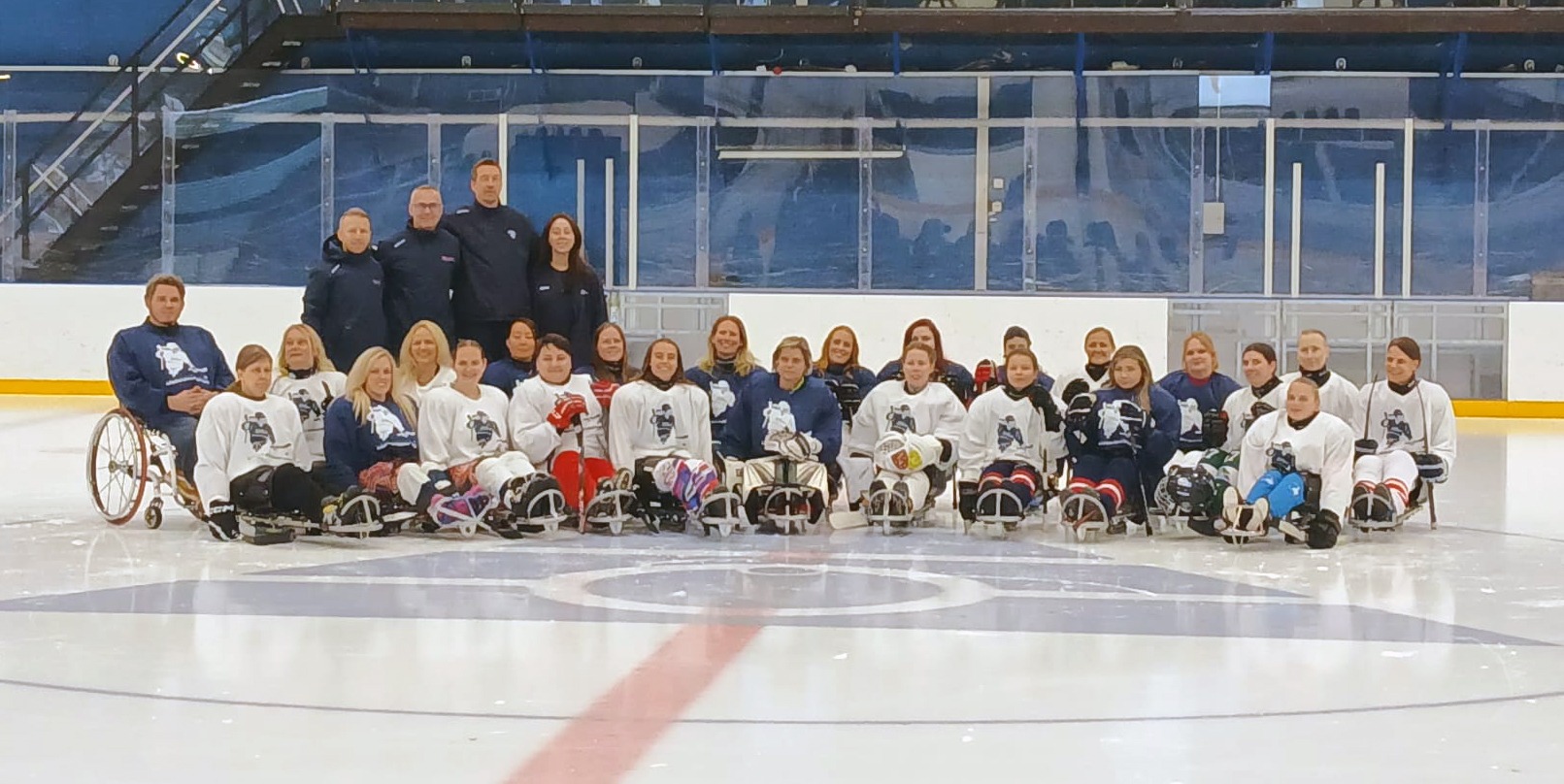
Selection from the applicant pool prioritized classifiable athletes and players from developing nations. U.S. and Canadian athletes served as mentors, with the focus squarely on emerging programs.
“We really wanted this camp to be focused on new countries like Hungary and France and the Czech Republic,” Quimby says.
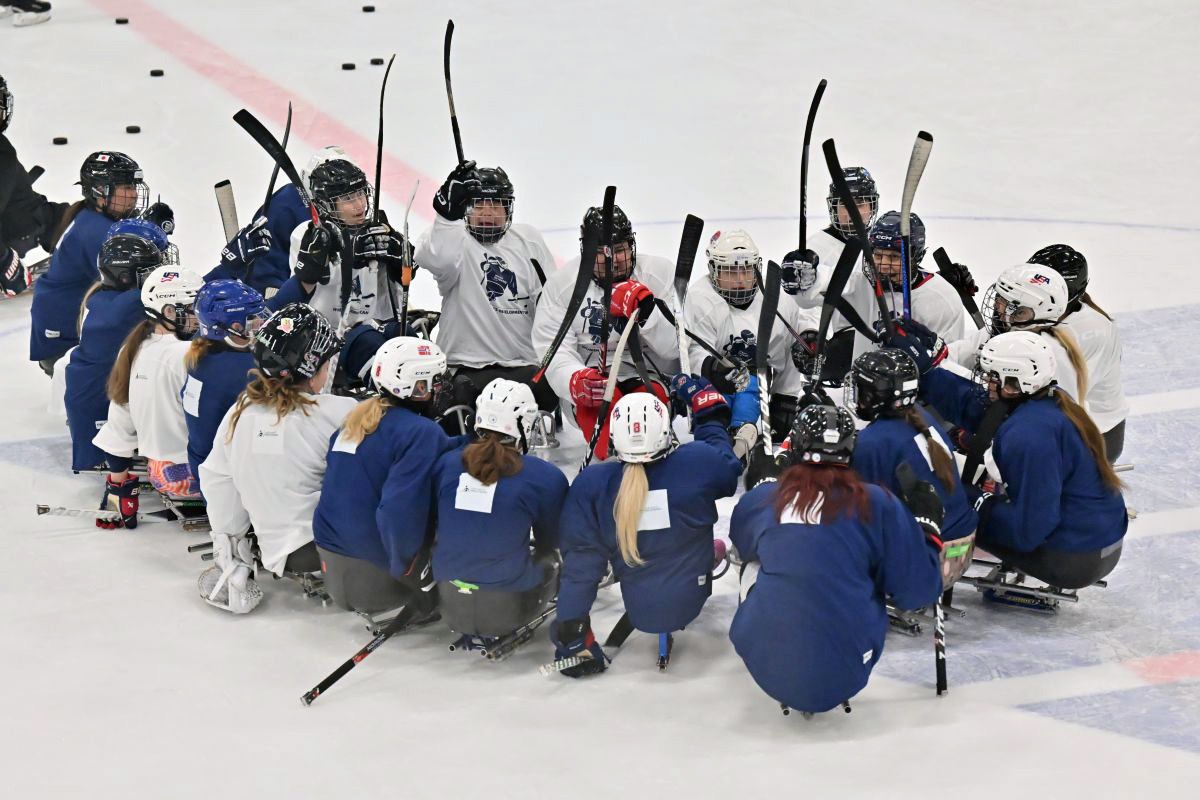
On the ice, sessions progressed from skills and drills to escape drills, one-on-ones, three-on-threes and small games, with dedicated attention to the two goalies in attendance — a critical position for any program looking to compete internationally.
“At the end, it was so much fun to watch them take all those skills and drills and mini systems that we were starting to teach them and have them implement them in a game,” Quimby says. “That’s the best part. Absolutely.”
Accessibility was integrated into every detail — wheelchair-accessible buses with lifts, accessible rooms and everything within a walkable distance on the Vierumäki campus. The goal was to remove every barrier that wasn’t the sport itself.
“I really wanted to make the camp as easy as possible for these women, so they didn’t have to think about the barriers they already had overcome in their everyday life — just focus on the sport, the community-building and having fun,” Quimby says.

The Road to 2030
The camps are not ends in themselves. They are the infrastructure for something larger.
Women’s para ice hockey currently has six national programs: the United States, Canada, Australia, Norway, Great Britain and a composite Team World, which would not count toward Paralympic qualification. To qualify for inclusion in the 2030 Winter Paralympics, the sport needs eight fully developed national teams and a second official world championship.
Mexico and Finland are the top candidates for two of those three needed programs. An Asian team remains a possibility on the horizon with Japan’s growing presence — Fukunishi became only the fourth woman ever to compete in a Paralympic open para ice hockey tournament at Milano Cortina 2026 — signaling real potential in the region.
“We haven’t really tapped into the Asian market when it comes to the women’s side,” Quimby says. “It’s something that is untapped at this point, and it’s something we should be developing and looking into.”
The second world championship is the other essential piece. An announcement is expected soon, and it represents the next formal step on the Paralympic pathway — a stage for developing nations to compete, gain experience and help the sport meet the threshold for consideration.
“We’re cutting it a little close,” Quimby acknowledged. “But the hope is out there.”
A Sport on the Rise
The growth of women’s para ice hockey over the past decade has been steady and striking. When the U.S. women’s program held tryouts in 2014, a handful of athletes showed up. Today, more than 60 competitive women attend annually. The program came under the USA Hockey umbrella in 2018, and last year saw the first official Women’s Para Ice Hockey World Championship — milestones that have transformed the sport from a grassroots effort into one with genuine Paralympic ambitions.
The foundation’s work — camps in Latin America, Finland and potentially Asia — is the bridge between where the sport is and where it needs to be.
“We want to make sure that we’re creating good competition,” Quimby says. “Giving them resources like high-performance off-ice training, how to maintain your sled equipment — these are things you’re not going to get anywhere else. You’re not going to get it by Googling. You have to actually experience it with people who know.”
For women around the world with physical disabilities who haven’t yet discovered the sport, the invitation is open.
“Come out and try this incredible sport,” Quimby says. “We’re now global. We’ve done a Latin America camp and a Finland camp, and we can’t wait for you to come try it out. Just get on the ice. Let’s have some fun.”
To learn more or get involved, follow Monica Quimby on Instagram or contact the Women’s Para Ice Hockey Foundation.
[Editor’s note: The second Women’s Para Ice Hockey World Championship is expected to be announced around June 30. This story will be updated with official details upon announcement.]